Innovative methods
The professional profile
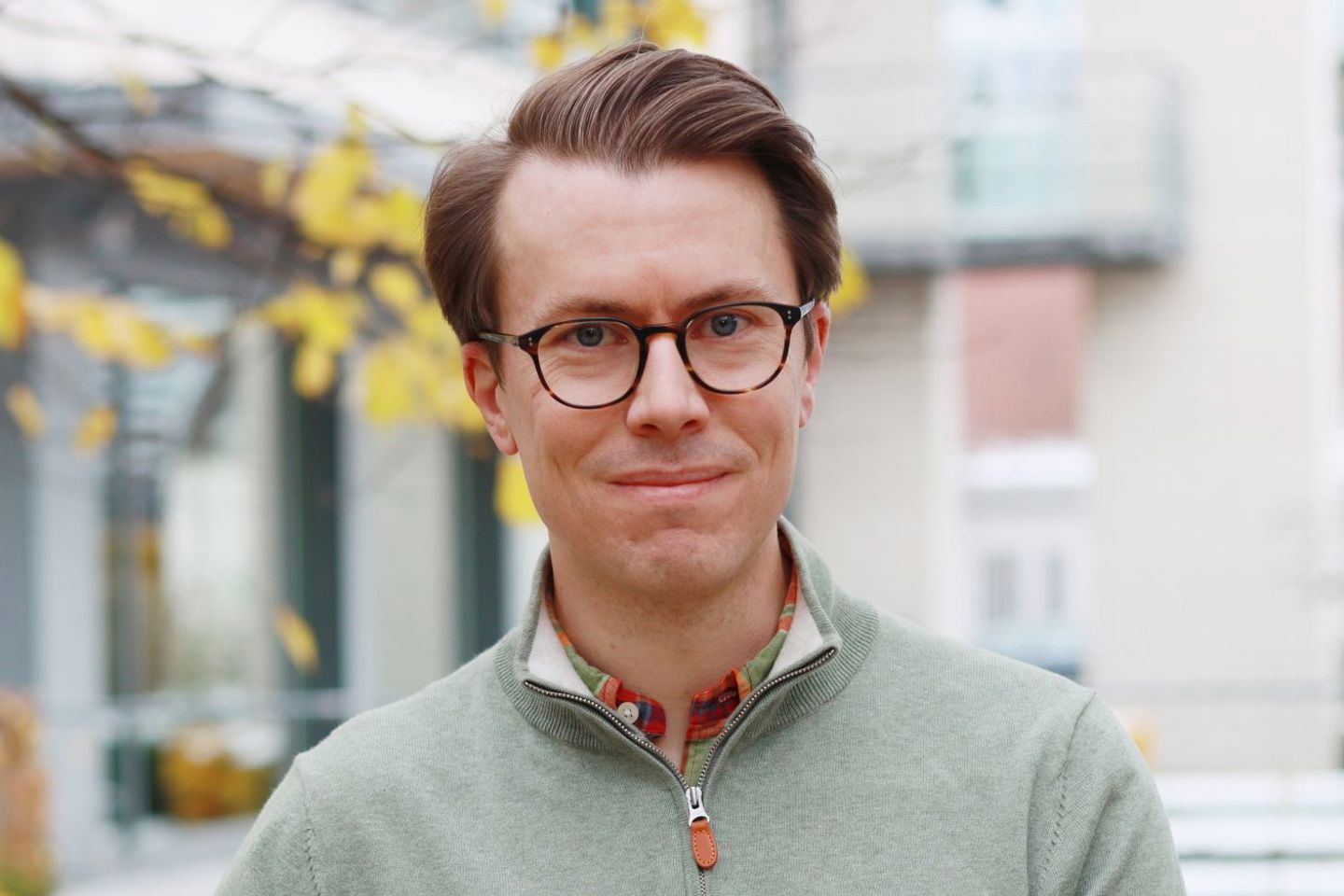
Photo: Multiconsult Marte Nordahl
Morten is a keynote speaker at the fib Congress 2025 in Oslo, where he gave a lecture entitled “Three Steps Towards a Digital Design Process.” He completed his PhD thesis on non-linear concrete analysis at NTNU in 2018, and in recent years he has mainly worked with programming.
- I find it exciting to explore what we can achieve in our projects through automation. By rethinking the way we work, we can make projects more efficient while also making the work itself more enjoyable. Instead of spending a lot of time producing analysis results, we can focus on interpreting them and identifying the right measures, he says.
In recent years, he has helped streamline workflows in several projects.
- One example is the Mjøsbru concept, where I helped automate calculations and data flow at the interface between geotechnics and structural engineering. We explored several variants to build a better understanding across the disciplines. It’s much more convenient to press a button than to send Excel sheets back and forth, Morten says.
A Family Influence
In addition to his job at Multiconsult, Morten holds a part-time position as Associate Professor II at the Department of Structural Engineering at NTNU. In various offshore wind projects, he has served as discipline lead and been responsible for global analyses, drawing on his research experience from NTNU to develop new solutions.
- When geotechnical engineers are designing monopiles for offshore wind turbines, they may need to run a very large number of simulations to assess different ground conditions. This is typically a manual process. By automating these calculations, we can complete half a day’s worth of work in ten minutes, he explains.
Morten grew up in Brandbu in Hadeland and has always been interested in mathematics and physics.
- So it felt natural to study at NTNU. I suppose it’s also in my blood, as my father is an engineer, he says.
The summer before completing his master’s degree, Morten had a summer job at Multiconsult.
“I really enjoyed it, and when I finished at NTNU in 2012 I was offered a position in what is now the Structural Analysis section, where I’ve worked ever since. After a year, an opportunity arose for a company-funded industrial PhD, he says.
During the first year of his PhD, Morten was based in Trondheim, but he spent the following three years mainly at Multiconsult’s head office in Oslo.
- It was important to involve the section I worked in, so it made sense to stay close to the environment, he explains.
Useful Research
In his PhD thesis, Morten combined computational mechanics to determine the load-bearing capacity of concrete with a significant component of statistics and reliability theory.
- One thing is to calculate a number; another is to determine how reliable that number is. How likely is it that the structure actually has the capacity you’ve calculated? These factors are interdependent, Morten says.
He received the Norwegian Concrete Association’s R&D Prize in 2018 for his work. According to the jury, Morten demonstrated in an exemplary way how research can be connected to and utilised within a company’s operations.
- Both during and after the PhD work, we have seen cases where the research has helped solve problems for clients. This might involve unusual loads such as explosions, ship collisions or other accidents with very high forces. The likelihood of such events is low, but the consequences would be severe, he says.
The method can also be used for structures with unusual geometry or for existing structures—such as bridges, dams or offshore installations—where the detailing does not meet current standards.
Efficient and Seamless
Since completing his PhD, Morten has periodically worked intensively on standardising non-linear concrete analyses.
- It’s a niche I work with when needed. It’s rewarding to sharpen the pencil a bit extra and solve problems for clients who may find themselves in a difficult situation. Sometimes it enables a project to proceed without reinforcements or other costly measures. It’s very motivating to create value for the client while also enhancing their experience of value, he says.
Both Morten’s expertise in concrete analysis and his interest in coding and programming contribute to the value he creates in his projects.
-I find it exciting to further develop the way we work through automation. It enables us to work more efficiently and collaborate more seamlessly across departments and disciplines, ultimately delivering an even better product to the client, he says.
The ability to develop himself while also creating value in projects is one of Morten’s greatest motivators.
- Working on a demanding assignment pushes you a bit further and helps you grow. At Multiconsult I have the opportunity to take part in exciting projects where we help the client identify the best concept to move forward with, he concludes.