
Diversity brings strength
Diversity and inclusion
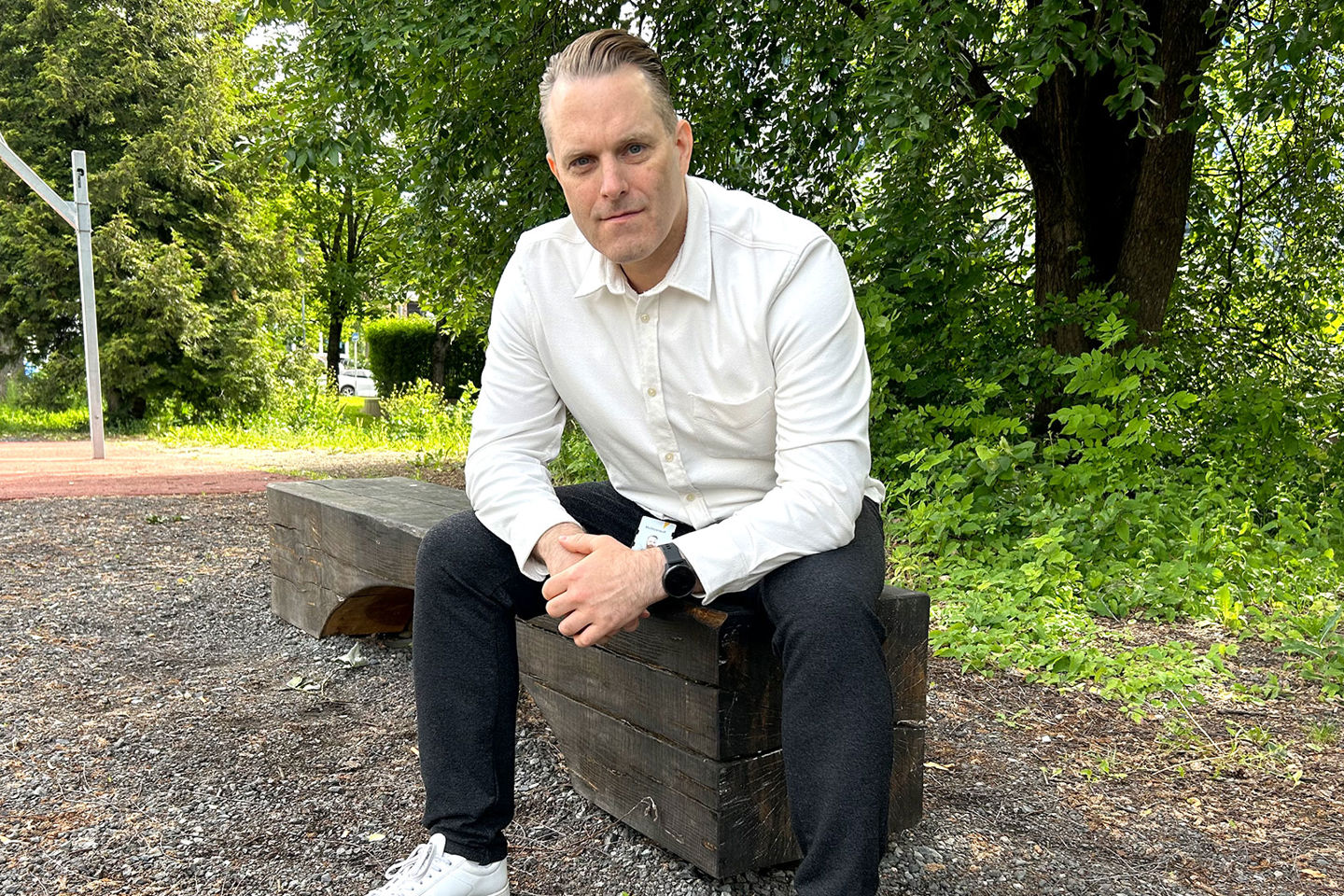
Photo: Birgitte Refsnes Johansen
Steven joined Multiconsult in the fall of 2023, and was the very first UX designer hired by the company.
– As Lead UX Designer, I am responsible for building UX at Multiconsult. This involves ensuring good user experience and holistic design in our products, being a bridge builder between business, organization and development, as well as developing and executing the UX strategy to ensure alignment with business goals and user needs, he says.
The first major project Steven has been involved in is about assignment portfolio reporting, and was launched this spring.
– It is a user-friendly application that all consultants at Multiconsult use when reporting on a project. Today, 1,500 users report on over 10,000 projects, and the implementation has been surprisingly painless. We have only received positive feedback, he says.
Interpreting signals differently
Growing up, no one thought that Steven might have an autism spectrum disorder.
– I was just a little weird. I was typically the one who said what everyone was thinking but didn’t dare to say – I was a bit direct and unfiltered. Like many others on the spectrum, I experienced bullying, and I had a limited circle of friends since I never quite fit in anywhere. I have always been interested in computers and got my first Commodore as a child. When I think about it, computer games and role-playing games may have been my way of filtering out the real world and jumping into a world I felt I had more control over, he says.
Steven considered becoming a graphic designer, but ended up starting at the Polytechnic University of Melbourne (later NITH).
– They had a collaboration with Swinburne University of Technology in Melbourne, Australia, so I lived there for two and a half years where I completed my bachelor’s and master’s degrees in IT. It was a fantastic period of my life, he says.
After returning to Norway, Steven worked as a developer and UX designer in several large organizations, but experienced both exclusion and a lack of understanding of his challenges from several employers.
– The conflicts were never about the quality of the work, but were rooted in communication problems. People with autism spectrum disorder often struggle to understand social signals, sensory impressions, communication and behavior in ways that are typical of people without autism, he says.
In 2017, Steven visited a doctor who determined that he qualified for an autism assessment.
– I realized that there was something wrong with me because I constantly ended up in conflicts in my working life. After the assessment, I was diagnosed with autism spectrum disorder, he says.
High-functioning autism
With the diagnosis, many pieces fell into place for Steven, but since he did not receive any follow-up from the health care system, he began to investigate what it actually meant.
– I found, among others, an Apple manager who posted a lot on YouTube, and I really recognized his experiences. Finally, I could put into words the challenges I have struggled with in a social context and in working life. Not everyone likes to refer to themselves as high-functioning autistic, but it makes it easier for people to understand. Unlike those with a more severe diagnosis, I have mild symptoms and manage well in everyday life – even at work with some adaptation and greater flexibility for my communication style, he says.
According to the Store medisinske lexikon, neurodivergence refers to neurological development, brain function and behavior that is considered different from most people in society at large. In addition to autism, conditions such as ADHD and Tourette syndrome are considered neurodivergent, and additional difficulties such as dyslexia and dyspraxia are often included. In total, it is estimated that between 15 and 20 percent of the population has some form of neurodivergence.
– Many workplaces boast that they are inclusive, but in practice many on the autism spectrum experience that employers are not that flexible when it comes to adaptation. The worst excuse I have heard when I asked for a little more understanding was the response from the employer that it was not possible because they had to protect the other employees as well, he says.
Flexible working life
After he was hired at Multiconsult, Steven experienced for the first time that the HR department asked him to come to a meeting to talk about autism.
– That attitude is a huge step towards increased understanding, and makes you feel more connected to the workplace. Not only that, but they also asked my boss to tell me what it's like to have an employee with autism on staff, he says.
– Since I started here, I haven't received any negative feedback, and that surprised me a bit. It's probably because I've learned a lot about myself and become more aware of what I say and do. We have a word for this – masking. It's a method of hiding autistic behavior and trying to fit into social situations. This is very demanding and you often get very tired, he adds.
Steven finds that Multiconsult actually takes being an inclusive workplace seriously.
– Unlike many other companies, which have only jumped on the inclusion hype, I have been met with understanding when I have asked for accommodations, and for example have great flexibility when I need a home office, he says.
Risky sport
People on the autism spectrum are more vulnerable to mental illness, and have a higher suicide rate than the general population.
– When you experience exclusion both in work and society, the road to depression is short. That is why increased understanding of autism is so important, he says.
Steven says that it only takes about seven seconds for a potential employer to form a first impression of you in a job interview.
– This makes it very difficult for many on the spectrum to progress in a job application process. It is risky sport to tell that you have autism, because very few of those who interview have an understanding of what autism actually is. Neither the individual nor society benefits from a large proportion of the population being outside the working world. Many people on the autism spectrum are very capable of working with a little adaptation, he points out.
We believe in diversity and inclusion.
Diversity and inclusion are essential to our success in achieving our ambitions. We want all our employees to be able to bring their own perspectives to the work we do together.
Diversity and integration at Multiconsult
All articles
Numbers, beliefs and belonging
Ibrahim is a Muslim and is committed to creating understanding.
Life's coincidences
Alicja is deaf, but rarely experiences challenges at work.
Valuable variety
Kaja got two weeks of paternity leave when her son was born. - I see the humor in that.