
That’s why we talk about the cities of the future
It is in our cities that societal challenges confront us, but it is also where the greatest opportunities lies.
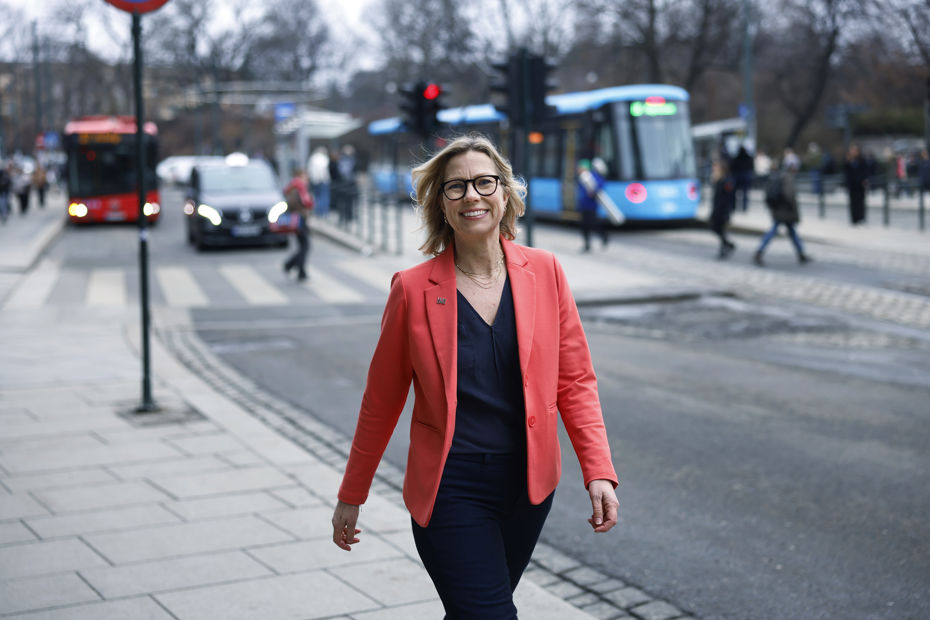
“How we plan and develop our cities today will shape society for generations to come,” says Kristin O. Augestad, CEO of Multiconsult Norge.
Today, the majority of the world’s population lives in cities and urban areas, and urbanisation continues to accelerate. In Norway, more than eight out of ten people live in densely populated areas, and growth is happening primarily in and around the cities. This makes urban development one of the most important societal tasks of our time. In cities, questions and challenges related to mobility, energy transition, climate impacts, inclusion, mental and physical health, and pressures on nature all converge in the same place.

“The cities and towns we are developing today must also function 100 years from now.”
Kristin Olsson Augestad
“We want to be part of the solution. Developing green, safe and vibrant urban areas requires close collaboration across disciplines, and the partnership between architecture and engineering is absolutely essential. As advisors, it is crucial to understand the future challenges cities will face, including climate, public safety and mobility. We bring this insight with us throughout our advisory work, from early‑phase planning to design and construction,” says Augestad.
She explains that urban transformation is a strategic priority for Multiconsult, and that the company is committed to sharing experiences and cases that show how, together with clients, they are developing the cities and towns of the future.
Cities for the future
Cities exist for the people who live and move within them. Urban transformation and development must therefore ensure the creation of safe cities and towns where people live well - today and in the future. It is about enabling people to move freely and efficiently without unnecessary emissions, but also about social meeting places and secure infrastructure.
“The cities and towns we are developing now must function 10, 30, 50 and 100 years from today. That places significant demands on how we think about planning, investments and solutions,” Augestad says.
Population growth in cities makes it necessary to densify where housing, services and infrastructure already exist. Development around public transport hubs, smarter land use, building upwards and more flexible housing types will be central tools. At the same time, former industrial and port areas provide space for new urban districts with housing, workplaces and recreation.
Augestad emphasises that cities must be for everyone, both young and old.
“The ageing population will influence how we develop cities and towns. An older population needs safe and health‑promoting urban environments with walking distance to services and meeting places. If cities are to function well over time, we must plan for all stages of life,” she says.
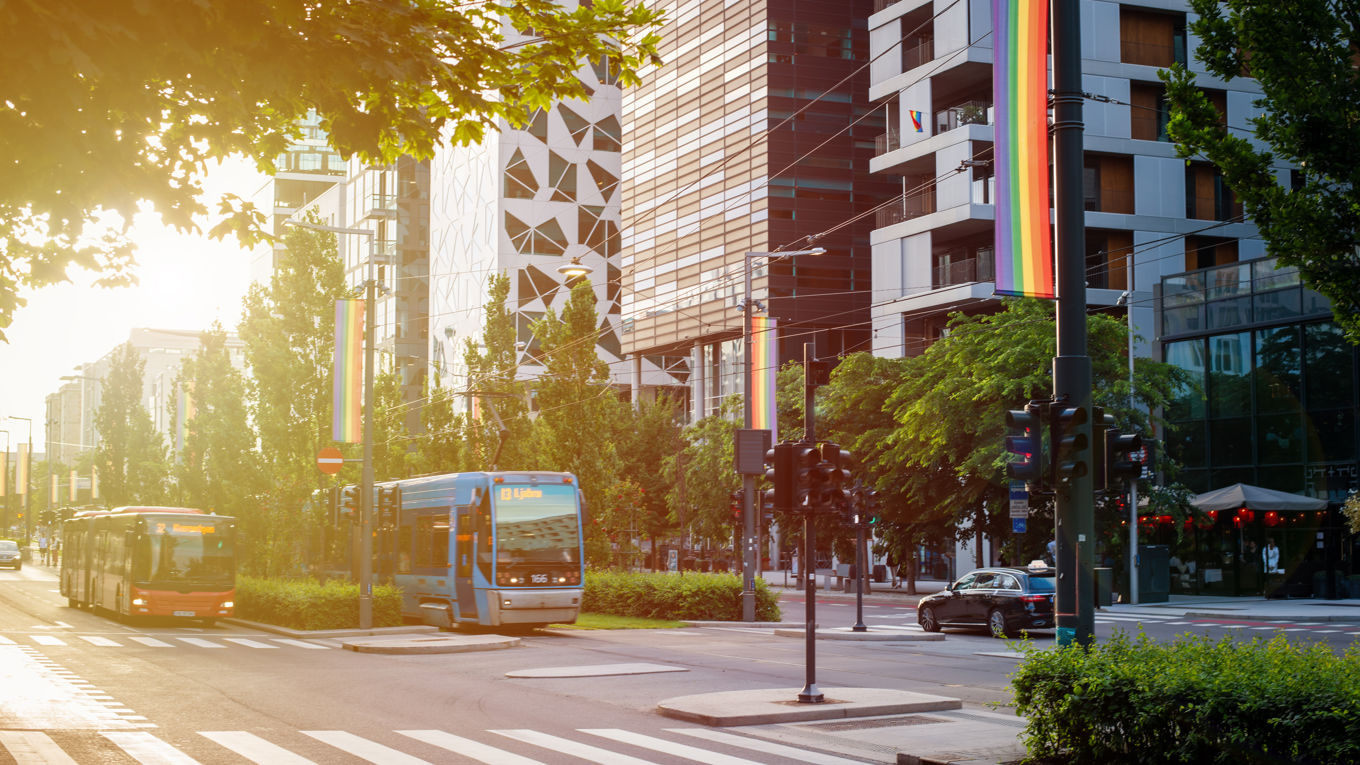
Byer er til for menneskene som bor i dem og beveger seg gjennom dem.
Photo: Adobe Stock
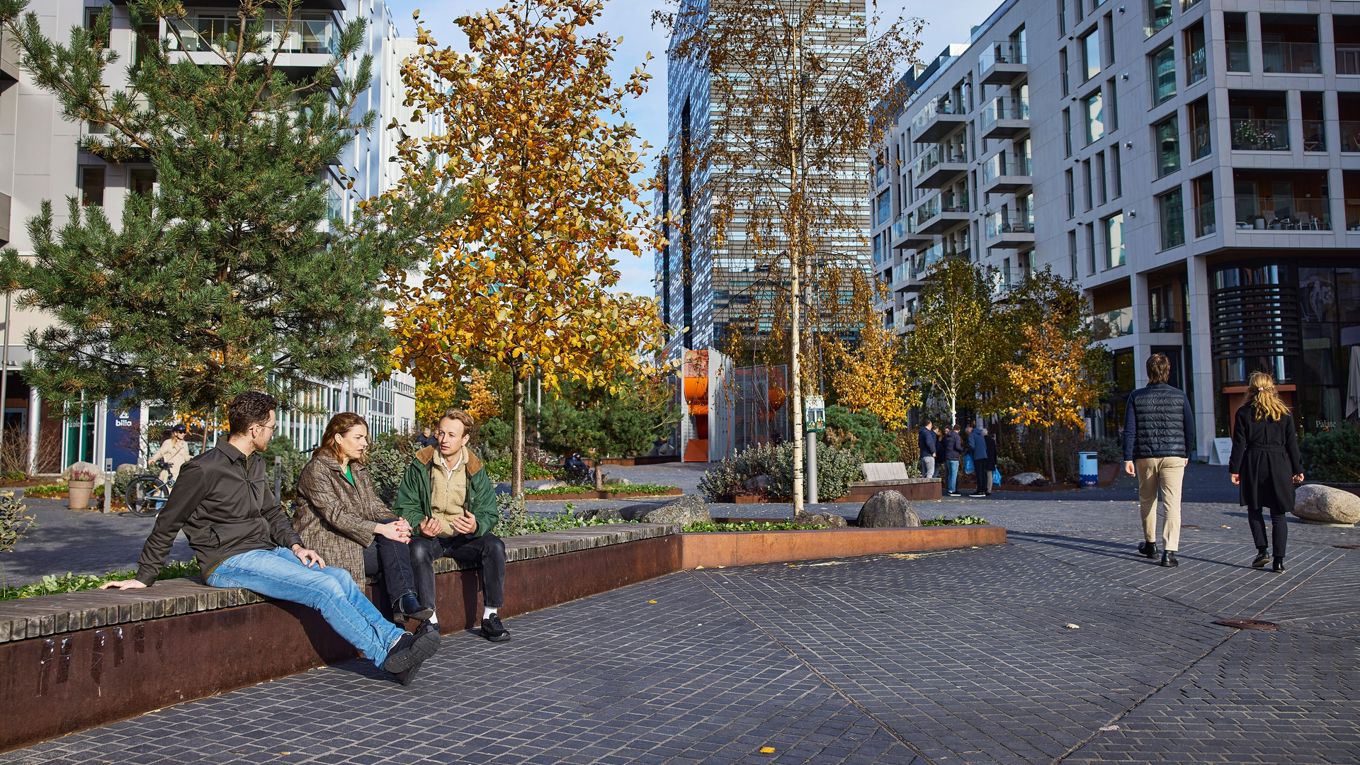
Cities and towns where people thrive and can move around on foot
Photo: Bård Gudim

Social meeting places.
Photo: Adobe Stock
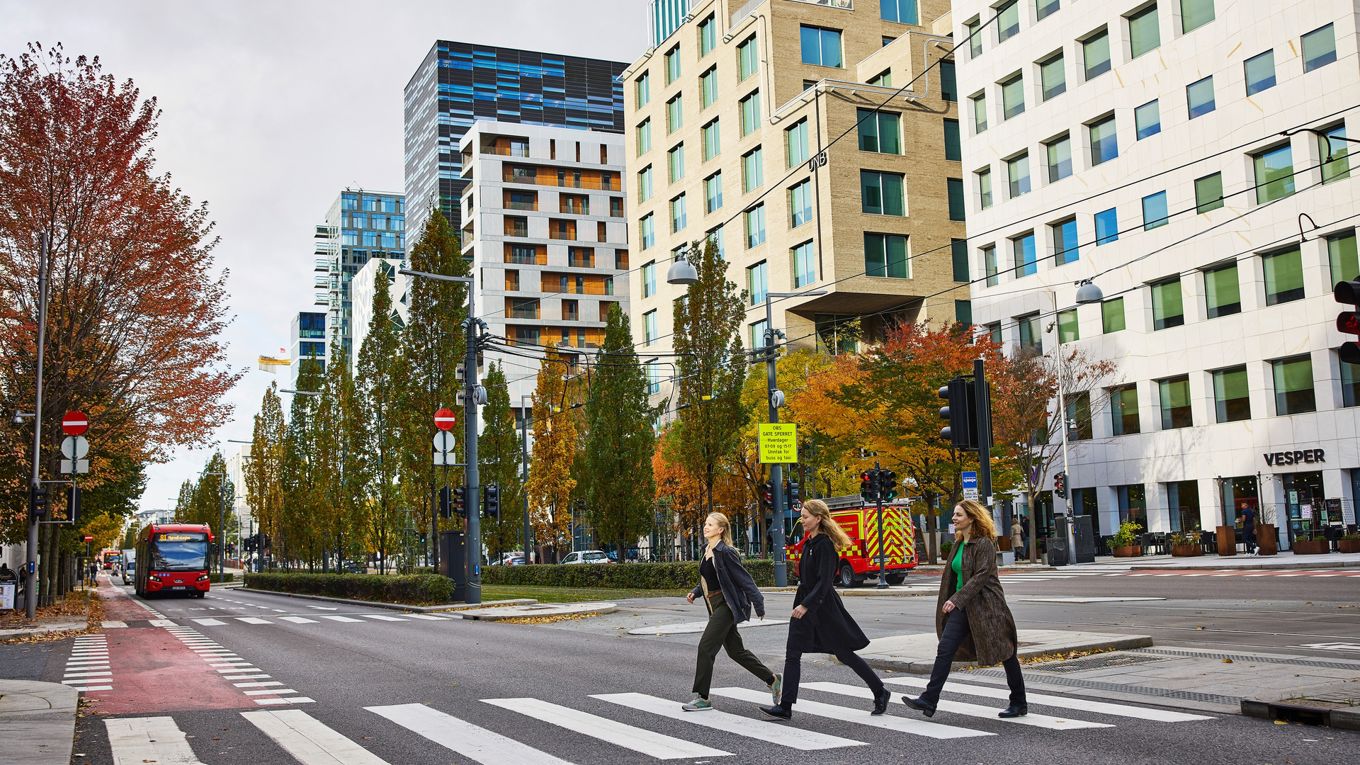
Traffic safety has become a defining issue in cities
Photo: Bård Gudim
Everything must be connected
Climate change has brought more extreme weather and an increased need for climate adaptation, also in cities. At the same time, cities must help reduce emissions and use energy more efficiently. A growing population puts pressure on land, infrastructure and nature. Taken together, this makes urban development an increasingly complex task.
“These are not isolated challenges that can be solved one by one. Mobility is connected to land use. Well‑being and safety are connected to social meeting places. Energy is connected to buildings and infrastructure. Nature must be understood in relation to urban life and health. If we are to succeed, we need to think holistically,” she says.
“The cities are where the biggest challenges lie. But they are also where people, expertise, technology and cultures meet. This creates enormous potential for innovation and strong development opportunities.”
Must work together
Augestad points out that the best solutions arise in the interplay between professional disciplines — whether it concerns climate adaptation, land use, energy transition, mobility, urban spaces, water and environment, or digital support for planning and operations.