
The cultural institutions that changed Oslo
Cultural landmarks of Bjørvika
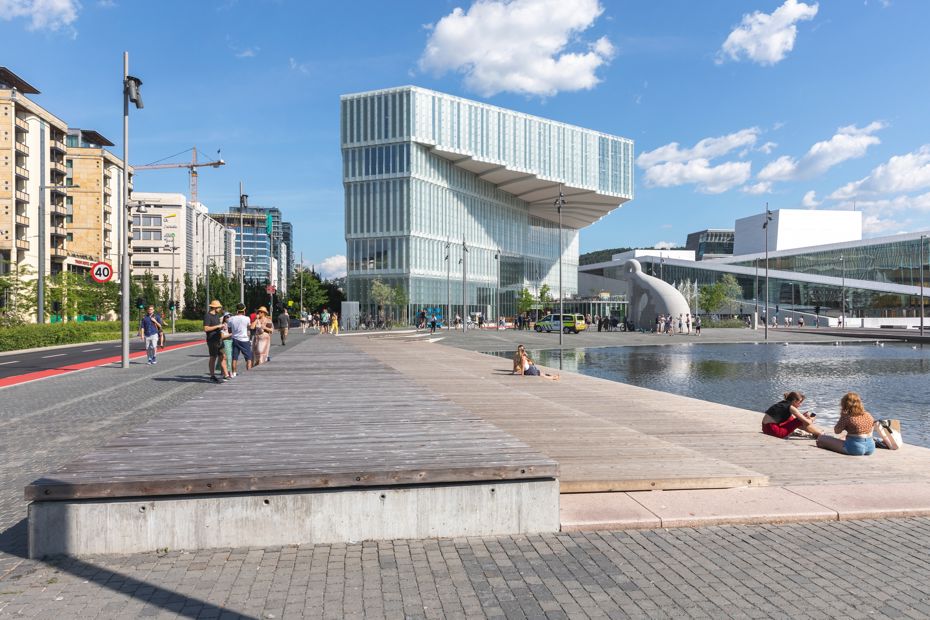
There are moments when a city changes its character. Not abruptly, and not with great fanfare, but through buildings that open themselves to people and invite them in. Bjørvika in Oslo has become such a place. In just a few years, the area has emerged as a cultural hub that has not only transformed the cityscape, but also the way residents use and experience the city.
“Oslo Opera House, Deichman and MUNCH have become open living rooms for the city, accessible, welcoming, and instrumental in shaping a new urban identity,” says Geir Juterud, Executive Vice President at Multiconsult.
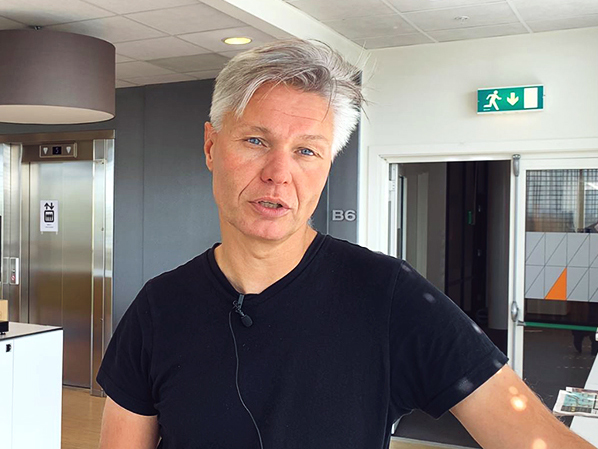
Geir Juterud, Multiconsult
“I am proud that we have helped realise the architectural concepts envisioned from the original design competitions, and that these buildings have become such a success with the public.”
The cultural institutions in Bjørvika have done more than bring culture to the capital. They have changed how Oslo is used and experienced. They have created new ways of inhabiting the city. They have opened Oslo towards the fjord. And they have given people more places to meet, free of charge and without barriers.
“The area demonstrates what can happen when architecture, culture and people come together”
Geir Juterud, Executive Vice President at Multiconsult
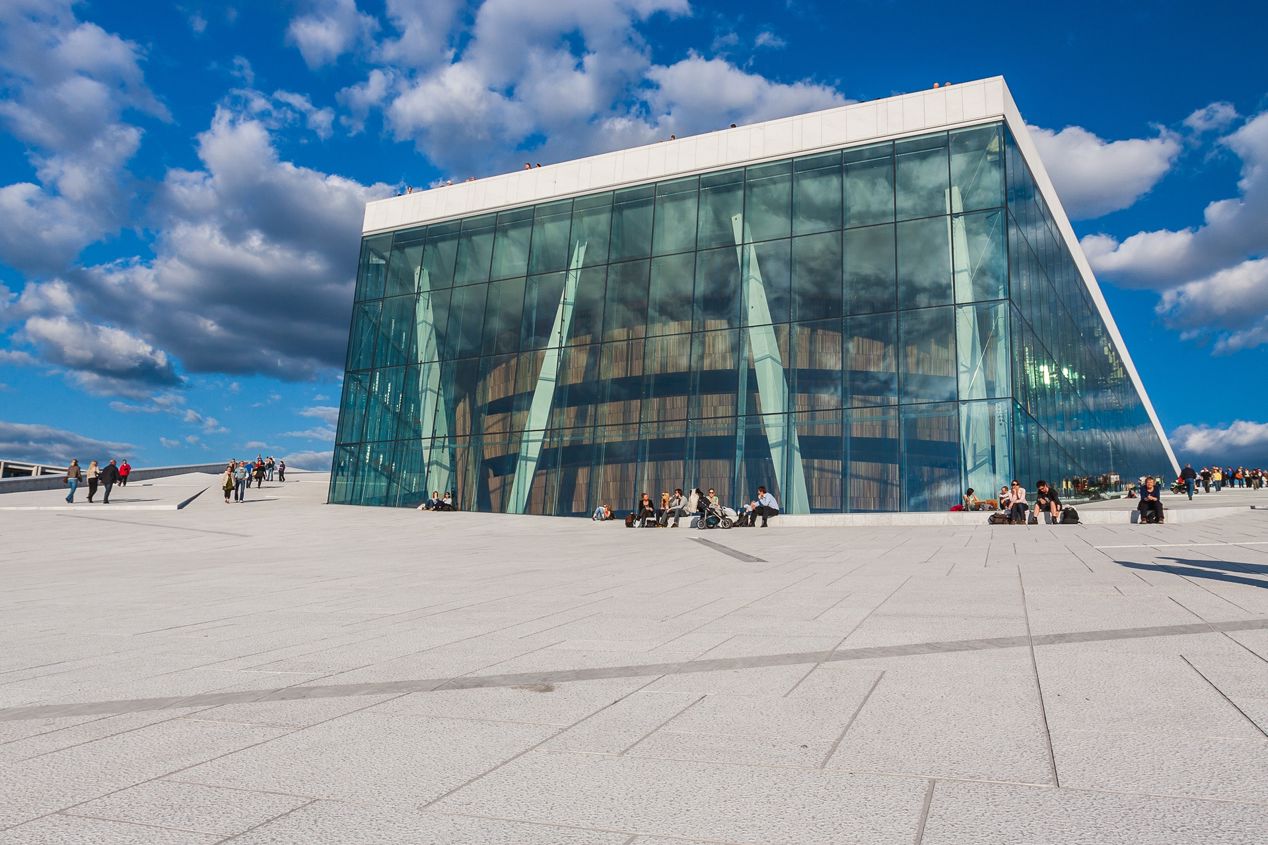
The Roof of the Oslo Opera House, Bjørvika, Oslo
Photo: Tove Lauluten
An opera house open to everyone
The white marble roof of the Oslo Opera House has long since become part of Oslo’s identity and one of the city’s most recognizable landmarks. Designed by the architectural firm Snøhetta, the building opened in 2008 and is the oldest of Bjørvika’s cultural institutions.
The Opera House is more than a venue for opera and ballet. It is a public space in its own right. Its distinctive roof slopes down towards the fjord and is open to everyone, making it one of the city’s most popular meeting places.
As a result, the Opera House has taken on a dual role: both as a national cultural institution and as one of Oslo’s most accessible public spaces.
“There is something unique about an opera house that you can experience without buying a ticket. You can simply walk up, sit on the roof, and be part of it. It is architecture that invites people in rather than shutting them out,” says Geir Juterud.
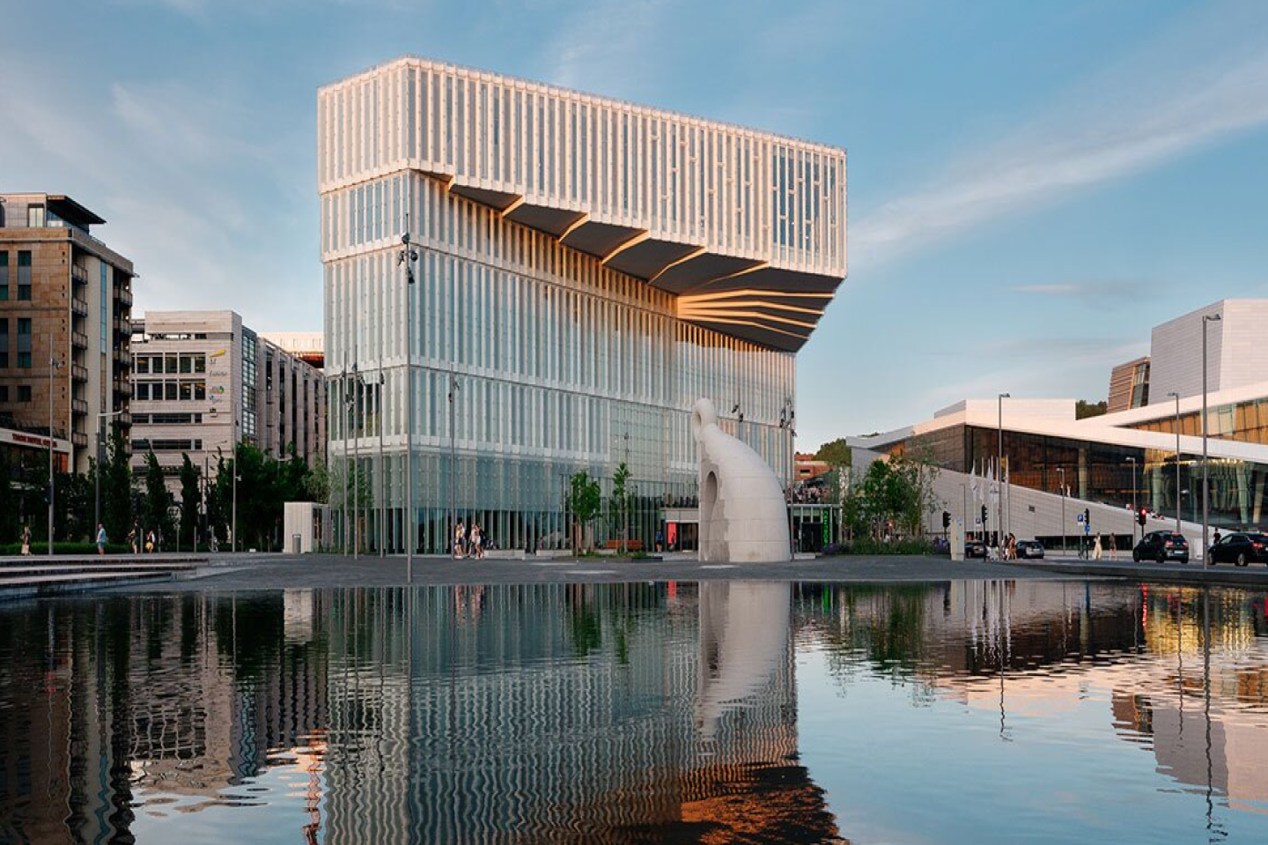
Deichman Library, Bjørvika, Oslo
Photo: Multiconsult
The library that became Oslo’s new living room
Deichman is Norway’s oldest and largest public library. When plans were made for a new main library in Bjørvika, the ambition was clear: to create a vibrant building where people could meet, spend time, and feel at home.
The result has become exactly that. From early morning until closing time, students work alone or together, book lovers settle into quiet corners, families fill the floors with life, and people gather over a coffee and conversation.
Today, the library is far more than a place for books. It has become one of Oslo’s most important public meeting places, a space where knowledge, culture and everyday life come together.
“Deichman is perhaps the clearest example of how a cultural building can be a meeting place and not just an institution,” says Geir Juterud, Executive Vice President at Multiconsult.

The Munch museum at Bjørvika, Oslo
Munch’s new home
MUNCH has done more than provide a new home for the works of Edvard Munch. It has also given Oslo a new icon. The museum has made Munch’s art more accessible than ever, attracting visitors from across Norway and around the world, while also becoming a destination for the city’s own residents.
“Visitor numbers have far exceeded what anyone could have imagined when plans for the new museum were first developed,” says Geir Juterud, Executive Vice President at Multiconsult.
“It has become a place where both locals and visitors can share experiences together.”
Before opening, the new museum, like the other cultural buildings in Bjørvika, sparked extensive public debate. Not everyone was convinced by the architectural vision.
“There was considerable discussion in the media about its architectural expression,” says Juterud. “But looking back now, I think most people would agree that it has been a tremendous success.”
Today, MUNCH stands as a symbol of a more confident and outward-looking Oslo, one that embraces contemporary architecture while making world-class art accessible to a broad audience.
Related articles
All articles
- How a shared digital model enabled holistic urban development in Oslo
The digital backbone of Bjørvika
That’s why we talk about the cities of the future
It is in our cities that societal challenges confront us, but it is also where the greatest opportunities lies.
The neighbourhood that puts people first
– A new district in Sandnes is taking shape
Why we write about the cities of the future
We write about the cities of the future because it is in cities that society’s biggest challenges hit us hardest, and where the opportunities are greatest. Urbanisation, climate change, the energy transition, mobility and social inclusion all converge in the same place. We care about this because the choices we make today will shape everyday life for people for generations to come.
Cities must work both now and far into the future. That demands holistic thinking, where land use, transport, energy, nature, urban life and safety are understood together. When we densify and transform existing areas, it’s about creating vibrant, inclusive and resilient cities — places where people can live, work and move in sustainable ways.
Together with our clients, we develop solutions that meet today’s needs and tomorrow’s demands.